What we did posts only click here

Friday, 13 October 2017

What we did-Curator's notes 6.10.17

Dear all, we thought you might like information from us, telling you a bit about what we do.

So, hello there.

We are now open again and have had a really busy week with around 60 children per day. This was from a school who had never visited us before. We are taking tons of school bookings, into next year, from as far away as England!

We are also taking lots of bookings for ‘Frightful Pharaohs’ Halloween Half Term workshop, a great opportunity for children aged 6-10 to learn and have fun in a museum setting: http://www.egypt.swan.ac.uk/whats-on/ So book now if you want your child to take part.


On Monday Wendy and Syd had a meeting with Human and Health Sciences regarding a proposed joint project on health and well-being. Watch this space!

Our very own Lauren gave a talk at Bristol all about her experiences as a volunteer at the Egypt Centre. For those that don’t know Lauren she originally came to us as a work experience student from school, went on to Swansea to study Egyptology, then did the MA in Museum Studies at Leicester (very prestigious) and is now employed as our shop manager.

I started the week with taking a picture of a weird looking bit of flint and then posted this piece about it: http://egyptcentre.blogspot.co.uk/2017/10/a-hollow-scraper-from-armant.html


On Wednesday Sam had a very successful meeting with the Student Union. We are hoping to work with them more in the future.

Thursday Syd went over to the Department of Classics, Ancient History and Egyptology and told them all about the Egypt Centre. He was so persuasive that several have agreed to volunteer. We are really short on volunteers to deliver activities with schools, so if you know anyone who would like to volunteer please contact us. Full-training is given.

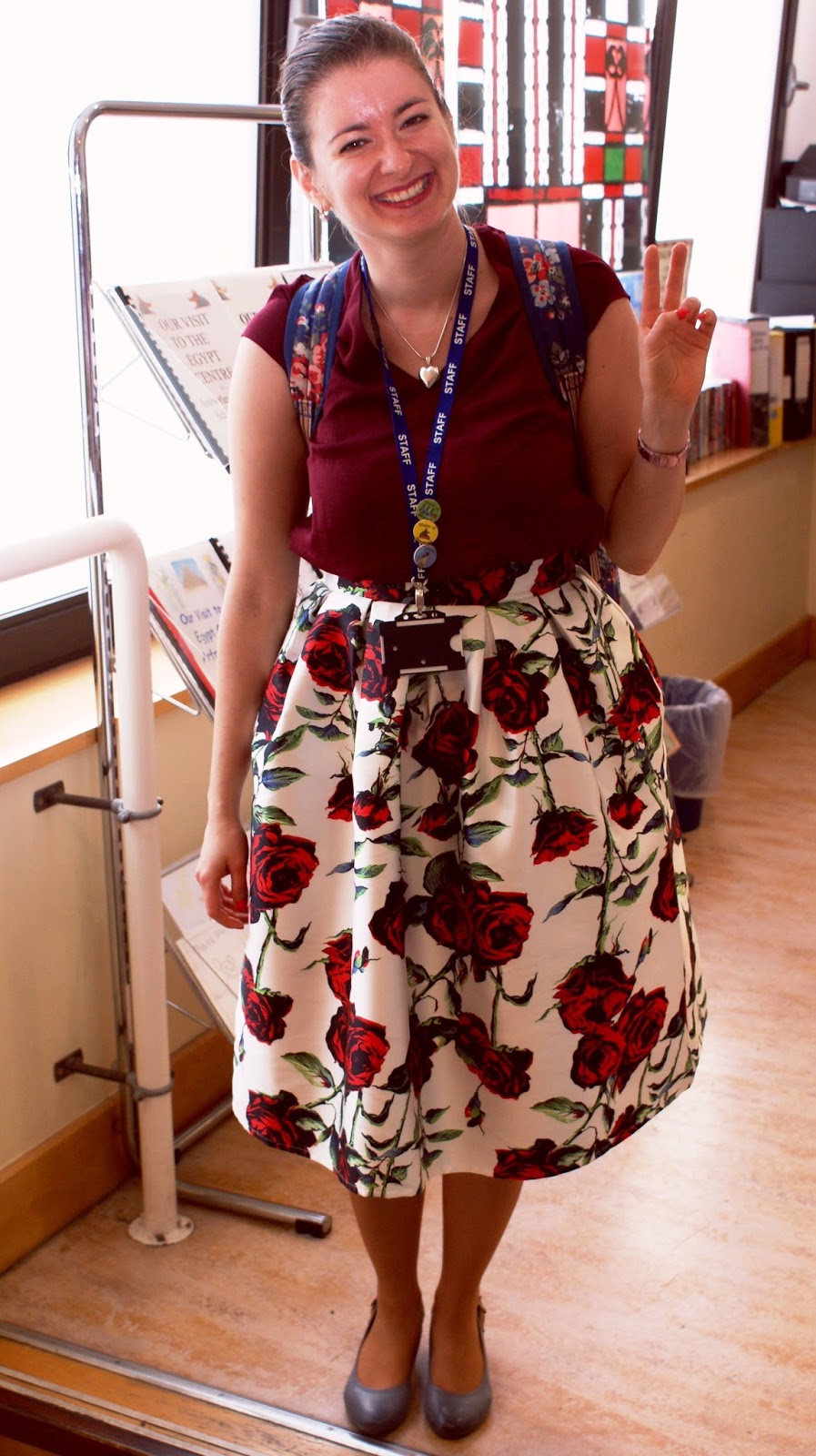
One of our amazing international volunteers Paulina is back. She is starting a PhD at Swansea. If you want to know more about her look no further than: http://egyptcentre.blogspot.co.uk/2017/06/paulina-sutorovamy-experience-at-egypt.html


I have been ploughing through some orphan labels- mainly Wellcome labels and also lot numbers which have got separated from their objects sometime between 1971 when the collection came to Swansea and 1997 when I started here. The Wellcome numbers are those which were given to the items years and years ago by Sir Henrey Wellcome, who was the original owner of the bulk of the collection. He bought lots of objects at auction, hence the lot numbers. This will take forever, but the intention is to do a bit at a time. If I find anything interesting I will let you know.

Ken Griffin who used to be an undergraduate volunteer with us but then rose to the dizzy heights of lecturer has just had his article which includes one of our shabtis. The citation is: Kenneth GRIFFIN. – ‘The Ushabtis of the Divine Adoratrice Qedmerut’ in Benoît LURSON, 2016 De la mère du roi à l'épouse du dieu, Von Der Koningsmutter Zur Gottesgemahlin, pp. 145–155. And if you want to know what a shabti/ushabti is, it is  a servant figurine to do the work for you in the afterlife. Well who wants to work when they’re dead?

Expect more news anon and if you do want to visit we are open Tuesday to Saturday 10am to 4pm. We can also arrange special tours and events for you by appointment.


Thursday, 12 October 2017

The Amduat in the Egypt Centre

Inspired by Kasia Szpakowska's talk for the Friends of the Egypt Centre last night, I thought I would introduce one or two artefacts in the Egypt Centre which may have Amduat influences. Kasia's talk was all about the Amduat, the ancient Egyptian afterlife book which shows the journey of the sun-god Re through the afterlife of the Duat. The earliest complete depiction known is from the tomb of Tuthmosis III (1479-1425 BC). 

Unfortunately, we don't have any pure Amduat scenes in the Centre but during the Third Intermediate Period (1069-747 BC), Amduat scenes influenced the afterlife scenes shown in tombs, coffins and papyri. We do have some coffin fragments and a complete, coffin with Amduat influence.

So, here we have W648: It shows the sun-disk in the morning embracing the scarab. Very similar scenes are shown on New Kingdom copies of the Book of the Dead Spell 15, but there a female figure usually embraces the sun-disk. By the Third Intermediate Period, it is the male god Osiris with elements of Shu from the Book of Caverns who does the embracing. And, by this date, Osiris is more closely linked with the scarab. In Amduate texts it seems that Shu is the god who reaches towards the scarab.


And here is EC1053: a piece of cartonnage showing Re in his night boat (you can see the stars), waiting to be reborn. He is shown as a child in a red uterine disk. It isn't entirely Amduat but does echo the idea of Re travelling through the Duat to be reborn,

Here is my favourite character from the complete Third Intermediate Period coffin in the Egypt Centre showing 
Hepet-hor, She Who Embraces Horus. This divinity is almost inseparable from Osiris, guarding his judgement hall. She also tends to appear where Osiris and Re 'get together' in order to renew Re. She does appear on an Amduat Papyrus in the Nelson Atkin Museum of Art, Kansas City, where she holds up Osiris.


Then there is the mound scene on our coffin, not unlike the Amduat mound of Sokar with the snake and rebirth connotations. And, Sokar was very much associated with Osiris. 


While these examples are not entirely Amduat inspired, and several also have Book of the Dead or other Otherworld book influence, they also have some similarities with the Amduat

Any mis-attributions, mistakes etc. are of course mine, not Kasia's!


Monday, 2 October 2017

A hollow scraper from Armant


This large crescent-shaped piece of flint is flaked all over. It has one concave edge 100 mm across and some cortex (the outside of the original flint pebble or slab) is visible. Hollow scrapers are usually found in the Thebes area and seem to be Middle Palaeolithic (around 300,000 years old). This example is from Armant, 12 miles South of Thebes. The brown patina shows it to be Palaeolithic.

From Seligman 1921, p. 124
Such items were described by General A. H. Lane Fox Pitt-Rivers in 1882. In 1921 Seligman suggested that these were probably prepared cores with the hollow retouched. One can imagine that they may have been used to scrape cylindrical hafts for other artefacts. However, what these were actually used for and why they have only been found around Thebes remains a mystery.


Hérisson et al 2016, fig. 22


Outside of Egypt there is a similar example from the Acheulean of La Grande Vallée at Colombiers (Hérisson et al 2016, fig. 22).


References

David Hérisson, Jean Airvaux, Lenoble Arnaud, Daniel Richter, Emilie Claud and Jerome Primault ‘Between the northern and southern regions of Western Europe: The Acheulean site of La Grande Vallée (Colombiers, Vienne, France)’ Quaternary International, 2016, 108–131.

Pitt Rivers, L. F. 1882, ‘On the Discovery of Chert Implements in Stratified Gravel in the Nile Valley Near Thebes’, Journal of the Anthropological Institute of Great Britain and Ireland, 11, 382–400.


Seligman, C.G. ‘The Older Paleolithic Age in Egypt’, Journal Royal Anthropological Society of Great Britain and Ireland, 1921, 51, 115–153.

Tuesday, 20 June 2017

Student Volunteer Paulína Šútorová

Paulína Šútorová: My experience at the Egypt Centre

Paulína Šútorová has completed her BA and MA degrees in Egyptology at the Department of Arts and Humanities at Swansea University and is shortly to undertake a PhD.

“My love and fascination for the history of Ancient Egypt started at an early age, when during my holiday in Egypt I had the chance to see the most famous ancient treasures, which the country has to offer. By the time I graduated from high school, the chance to study Egyptology at university became the only logical solution to satisfy my growing passion for this subject, and that is how I ended up here at Swansea University.

            During my undergraduate studies in Egyptology I realised, that one thing is to study this subject in theory and another is to put all your knowledge into practice. For that reason, in my second year, I decided to join the Egypt Centre as a volunteer on the 8th October 2014. From then on I mostly volunteered during Wednesdays and when my university duties allowed me to spend more time in the museum, I was always happy to come in whenever it was possible. From the two galleries, the House of Death became my home, my shelter, my “House of fun” (©Yuval), where I met many nice and sweet people both local and international. As I like to say, I found my second family here, who broadened my knowledge of Ancient Egypt even more not only by introducing me to the objects of both galleries, but also by training me in the three major activities of the Egypt Centre – the mummification, senet and material board.

            For more than three following years, I worked as a Gallery assistant. My main job was to greet visitors and to show them around the galleries. Furthermore, I assisted our Educational Leaders, mainly the Wonderful Roger Jones, whom I shadowed when he taught schools various lessons about Egypt. His hilarious jokes such as “Gudja, gudja” (Roger’s sacred words, which according to him should be recited by the sem-priest during the Opening of the mouth ritual) became popular and I also started to use these jokes now myself, when I demonstrate the activities. Together we started to be recognised as the “Dream team”.

            After finishing my Masters, I decided to apply for a PhD course here also due to the availability of the Egypt Centre, which has been my constant motivation to improve my academic knowledge and museum skills. Until my degree starts in October, I have taken up many opportunities, which the museum offered me in order to fill my free time. For example, gaining so many new contacts at the Egypt Centre brought me the opportunity to teach senior volunteers some basic hieroglyphs. Our weekly lessons made me practice my teaching skills and I am eternally proud and grateful to my amazing students for their serious on-going interest in my classes and for doing their homework without further comments. I also made a decision to catch up all the museum training and activities, which I have not managed before due to my university responsibilities. So far I have become a mentor for couple of new volunteers, where I have done their induction and showed them around the museum. Moreover, I have participated in creating entertaining and useful activities for the upcoming work placements of 14–15 year olds.  I also undertook several trainings of the activities, which are done in the shared area and in the House of Life, working with school groups who have visited the museum. I can honestly claim that I cannot wait what the Egypt Centre has in store for me next.”


Tuesday, 14 March 2017

Pig fat in Early Dynastic Egypt?


Here is a grotty (sorry) picture of one of our Early Dynastic pots (AB98). It came to us from Aberystwyth University in 1997, is 45.5cm high and is oozing 'oil'. Recently the oil has been analysed by Andrew Hardy and Paul Finch. It was found to contain non-ruminant (i.e. not cow or sheep/goat) animal fat, probably pig fat. There were also traces of grasses which possibly scented the oil.

We do not know where this vessel came from, though it is likely to have come from a tomb.

Apparently Early Dynastic (3100-2686 BC) Egyptian royal courts had departments which dealt with the raising of pigs and a separate department for rendering cow fat (Wilkinson 1999, 110). Oil was used in food but also for anointing and for cosmetics. Many hundreds of such jars have been found in the tombs of the elite.

The results have been published in Pharmaceutical Historian 47/1 2017.

References
Wilkinson, T.A.H., 1999. Early Dynastic Egypt. London and New York.

Wednesday, 8 February 2017

Photography and Egyptology

On Friday 18th December the Egypt Centre opened its cases to photographers. Or rather, we took objects off display and invited people to come and photograph them. We know have an exhibition of some of the resultant work which is on display in the Taliesin bar area.

The point of this was to see if photographers would view our artefacts any differently than Egyptologists might. Well you can decide for yourself.

The Exhibition will run in the Taliesin from 4th Feb—10th March before touring to the following destinations:
The Grand Theatre from Swansea 21st March         
Carmarthen Museum from 11th April   

Cynon Valley Museum from 25th May

Here are just a couple to wet your appetite (for the Egyptologists you can click on the accession numbers to find a bit more about the objects). The top is W379 and the bottom, W307.


Wednesday, 6 July 2016

My first week at the Egypt Centre/ Mi primera semana en al Centro Egipcio

Guest blog from Juan Dawber, MA student on placement from the Department of Languages, Translation and Communication at Swansea University.


I must say this first week at the Egypt Centre has been a great experience for me. I have met very nice friendly people and have been very happy with my internment choice. Since an early age I have been very interested in History despite the fact that my Master´s degree here in Swansea is in a different subject (MA Translation and Interpreting), so the opportunity presented to me of learning more about the History of Ancient Egypt has been most interesting as it is a subject to a large extent hitherto unknown to me. My only source of information had been films and things I had read in books, but that has been nothing compared to the detail I have learnt here.

My work colleagues have shown me all the objects and material on view to the public, the work involved such as checking that everything is in its correct place, especially the books, for example, and keeping everything neat and tidy and getting a general idea of where everything is in the Museum. 

They also showed me on the very first day the mummy Bob on which the mummification process was done by them a couple of times so as to have a general idea how was done, and this without taking into account the ones I have observed and looked after (studied) throughout the week. I also liked the Hall of Death on the lower floor very much where you can find everything related to the Gods, the religions, the tombs and the funeral rituals. All this latter being more related to the everyday activities through all the periods of Egyptian life; the dynasties, the scriptures, the war weaponry etc.

 I must say in general it has been a very positive experience for me and I would like to thank my colleagues in the museum for being so friendly and helpful. And with very special thanks to Syd for accepting me and letting me have the opportunity to work in the Museum.

TRANSLATION
    
MI PRIMERA SEMANA EN EL CENTRO EGIPCIO
Debo decir que mi primera experiencia en el Museo egipcio ha sido muy positiva, la gente y mis compañeros  todos muy agradables y una buena atmósfera de gente, por lo que estoy muy contento a día de hoy con este periodo de prácticas. A pesar de que el Máster que curso aquí es de Traducción e Interpretación, siempre me ha interesado la historia desde pequeño y aunque esto sea un campo algo distinto a lo que estoy estudiando en la universidad, me alegro de poder saber algo nuevo que es la historia del antiguo Egipto la cual es desconocida para mí. Lo único que he oído o visto sobre ese periodo histórico ha sido a través de películas, algunos libros y durante mi periodo de educación básica en el colegio, pero sin especificar de la manera como se hace aquí. Los compañeros del museo me han ayudado y también enseñado todo el material y los objetos expuestos al público, así como los chequeos que se van realizando durante el horario de trabajo donde nos aseguramos de que todo esté ordenado y en su sitio, como por ejemplo los libros, que todo esté limpio y una idea general de donde está todo.

El mismo día que empecé también me enseñaron el muñeco momia Bob en donde me  hicieron la demostración del proceso de momificación como un par de veces dos compañeros míos, sin contar tampoco las veces que tuve que ejercer de asistente a lo largo de la semana.

Me gustó mucho la Sala de la muerte, donde además de la momia Bob, se encuentra todo lo relacionado con la religión, dioses, lápidas, tumbas y rituales funerarios a los muertos. Después tenemos la Sala de la vida en el primer piso, en la que se encuentra todo lo relacionado con las actividades generales diarias a través de los distintos periodos en el antiguo Egipto, ya sean dinastías, escrituras, armas de guerra, artesanía etc.

En general esta primera semana ha sido una experiencia positiva para mí y me gustaría agradecer a mis compañeros por el apoyo y la ayuda recibida. Y en especial agradecer a Syd por darme la oportunidad de poder hacer mis prácticas aquí.


JUAN DAWBER